 EN
EN  Romana
 Deutsch

Healthy Sleep Begins with the Environment You Sleep In
Sleep isn't just about the number of hours you spend in bed—it's also about the quality of the environment where your body rests. Room temperature, the materials that come into contact with your skin, and your body's ability to regulate its temperature all play a vital role in achieving deep, restorative sleep.
In recent years, growing research on sleep hygiene has highlighted the importance of natural materials in promoting thermal comfort and maintaining uninterrupted sleep. Among them, wool stands out as one of nature's most remarkable fibers.
The Right Bedroom Temperature Matters
Your body follows a natural rhythm that helps prepare you for sleep. As bedtime approaches, your core body temperature gradually drops, signaling to your brain that it's time to rest.
For this reason, sleep experts generally recommend keeping the bedroom between 16°C and 20°C (61–68°F) for optimal sleep.
However, even if the room temperature is ideal, your bedding can make all the difference.
Synthetic or poorly breathable materials can trap excess heat and moisture, causing overheating, night sweats, frequent awakenings, and reduced sleep quality.
Why Natural Materials Make a Difference
Natural fibers offer two key benefits that support healthy sleep:
-
They allow your skin to breathe.
-
They naturally regulate moisture and temperature.
Throughout the night, your body continuously releases heat and moisture. When these natural processes are restricted by synthetic materials, the microclimate inside your bed can become too warm or too humid.
The result is often restless sleep and waking up feeling less refreshed.
Wool: Nature's Temperature Regulator
Wool is one of the most effective natural materials for maintaining thermal comfort while you sleep.
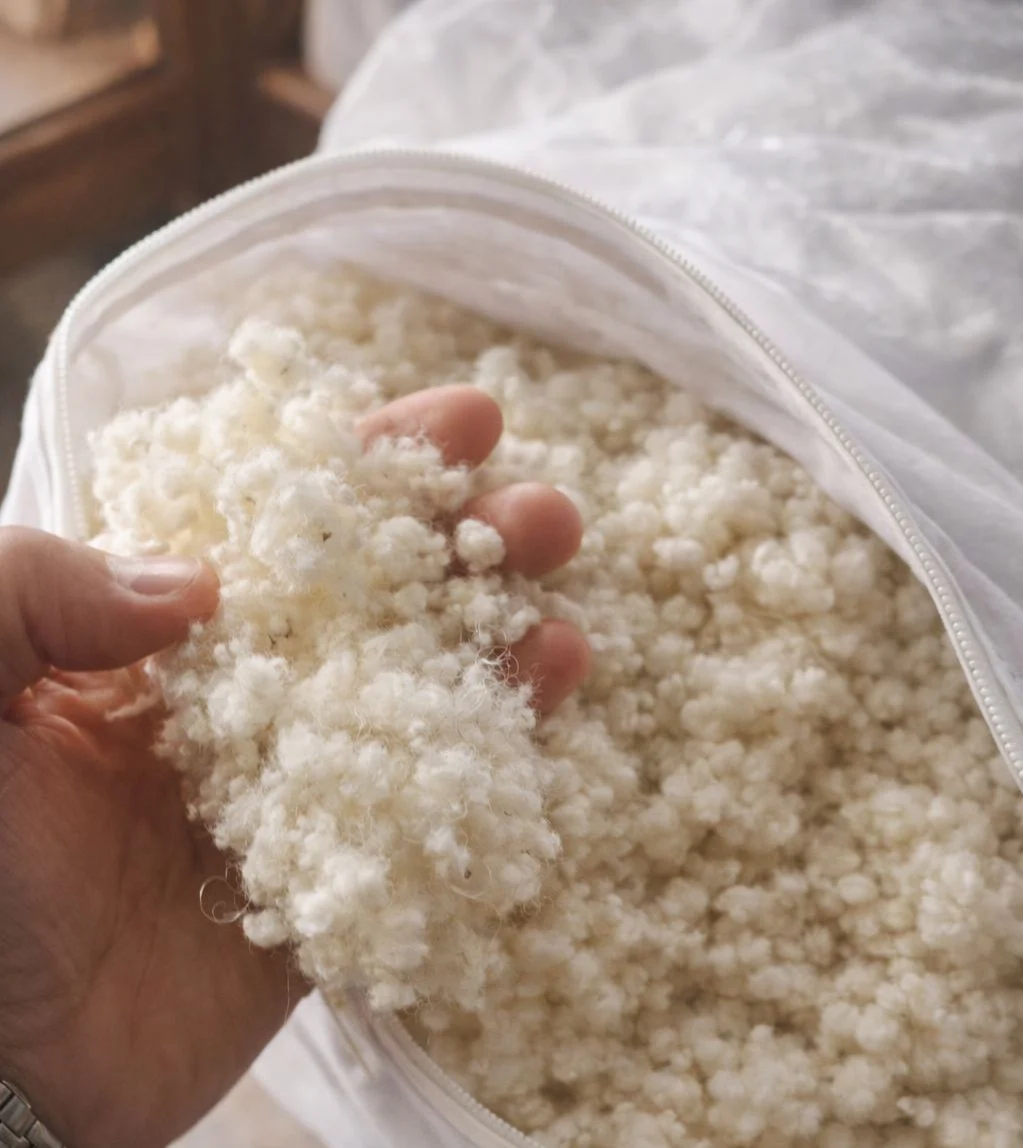
Each wool fiber has a remarkably complex structure containing tiny air pockets that act as natural insulation. This unique design enables wool to respond to changing temperatures throughout the night.
It helps to:
-
Keep you warm when it's cold.
-
Release excess heat when you're too warm.
-
Absorb moisture while remaining dry to the touch.
In fact, wool can absorb up to 30% of its own weight in moisture without feeling damp or clammy. This helps keep your bedding dry, comfortable, and pleasant throughout the night.
A Stable Sleep Microclimate
Sleeping with natural wool bedding creates a more stable microclimate around your body. Instead of constantly working to regulate temperature, your body can focus on what matters most—restorative sleep.
Many people notice that sleeping with wool bedding helps them:
-
Wake up less often during the night.
-
Experience fewer night sweats.
-
Feel more refreshed in the morning.
This can be especially beneficial for people who are sensitive to temperature changes, as well as young children, whose bodies are still developing their ability to regulate body temperature efficiently.
Better Sleep Starts with Natural Choices
Quality sleep is one of the foundations of good health, sustained energy, and overall well-being. Creating the right sleep environment is one of the simplest ways to support your body's natural restorative processes.
Natural materials—especially wool—help create a sleep environment that is breathable, thermally balanced, and comfortable throughout the night.
Lanawool products are designed with exactly this purpose in mind. Crafted from natural wool, they help maintain a comfortable sleeping temperature, keep your bedding dry, and provide the ideal conditions for deep, restorative sleep—just as nature intended.