 EN
EN  Romana
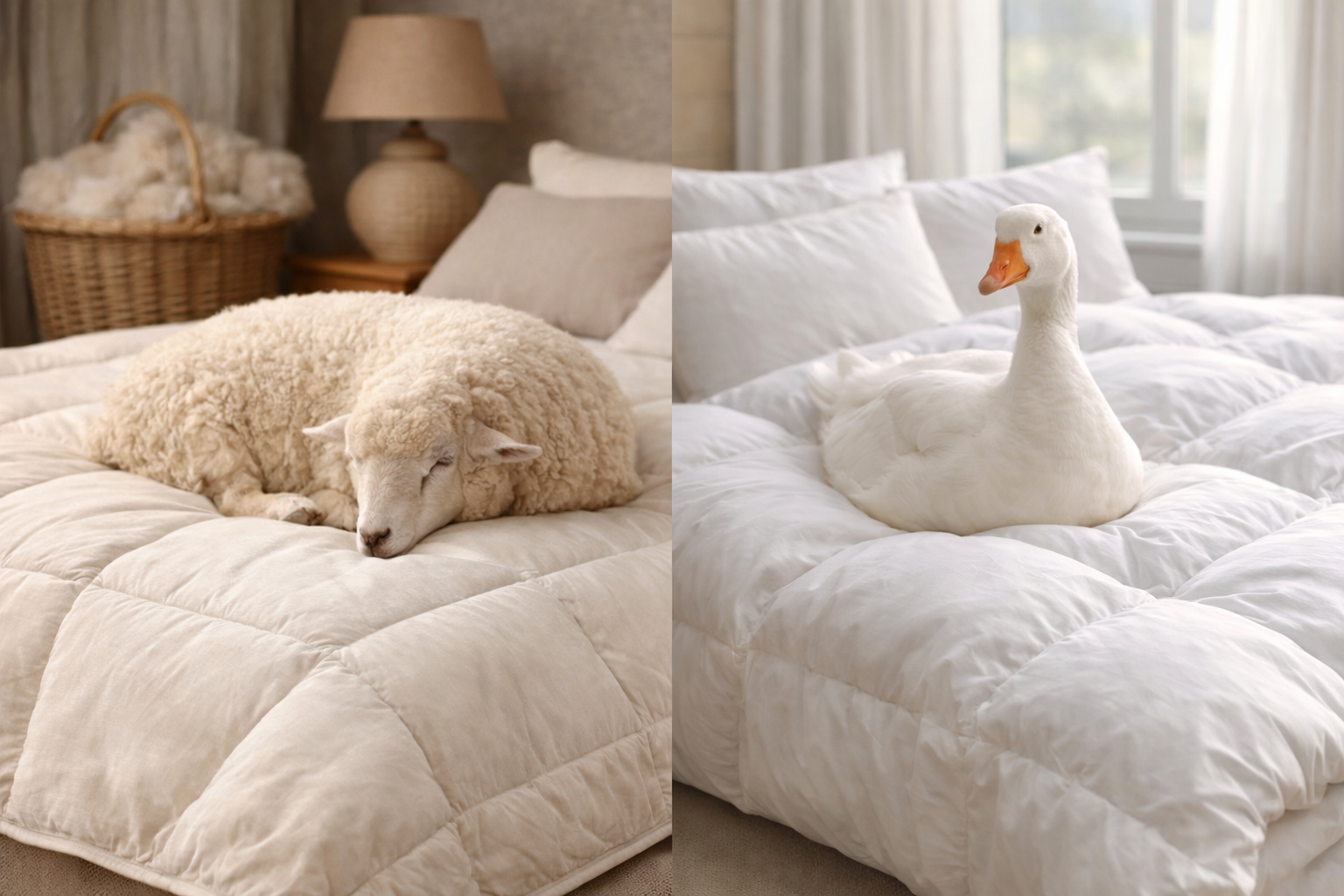
In a market where comfort is often reduced to a first impression, choosing between Merino wool and goose down is about much more than warmth or weight. It's about how well you sleep, how your body feels throughout the night, and—more than ever—the impact your choices have on the world around you.
Two natural materials, two very different sleep experiences. The real difference isn't something you notice only in the first few minutes after getting into bed—it's something you feel every morning when you wake up refreshed - or not.
Instant Comfort vs. Comfort That Works All Night
Goose down is undeniably impressive at first touch. Light, airy, and cloud-like, it creates an immediate feeling of softness and luxury. For decades, it has been associated with premium bedding and exceptional comfort.
Merino wool offers a different kind of luxury.
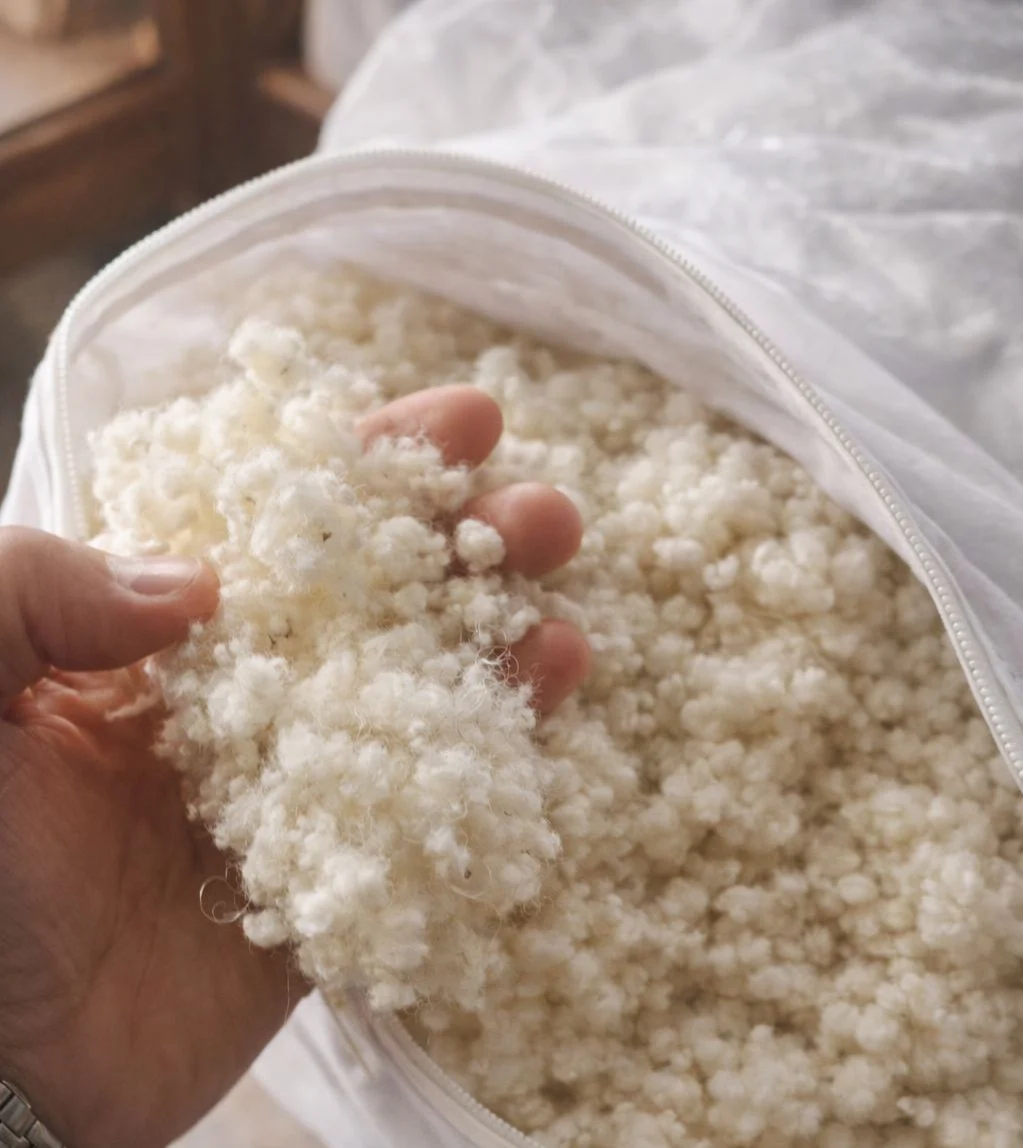
Instead of relying on softness alone, it actively works with your body. Its natural fibres regulate temperature, absorb excess moisture, and gradually release it, maintaining a stable sleeping environment throughout the night. It isn't the kind of comfort that wins you over in five seconds—it's the kind that keeps you comfortably asleep until morning.
That is the fundamental difference: Goose down provides instant comfort. Merino wool provides lasting comfort.
What Happens While You Sleep—and Why It Matters
Your body is constantly changing throughout the night. Your temperature rises and falls, you sweat—even when you don't notice it—and your nervous system responds to even the smallest discomfort.
Goose down is an excellent insulator. However, for people who tend to sleep warm or perspire during the night, that insulation can become a disadvantage. Moisture may become trapped, creating an overly warm sleeping environment that leads to brief awakenings you may never consciously remember.
Merino wool behaves differently. It absorbs moisture while remaining dry to the touch, then gradually releases it, helping keep your skin dry and your body at a comfortable temperature throughout the night. The result is deeper, more consistent, and more restorative sleep.
The difference may seem subtle—but the impact on sleep quality can be significant.
Durability and Care: An Investment or a Consumable?
Another important difference is how these materials perform over time.
Goose down requires careful maintenance. Improper or frequent washing may reduce its loft, cause clumping, and eventually diminish its insulating performance. Professional cleaning is often recommended.
Merino wool is naturally resilient. Its fibres retain their shape, resist compression, and naturally inhibit the growth of bacteria and odour, reducing the need for frequent washing.
In everyday life, this means less maintenance, lower long-term costs, and a product that continues to perform beautifully for years.
Allergies, Sensitive Skin, and a Healthier Sleep Environment
For families, children, or anyone with sensitive skin, the choice of bedding is also a health consideration.
If not properly maintained, goose down can create an environment where dust mites thrive, and in some cases it may trigger allergic reactions.
Merino wool offers natural advantages. Its excellent moisture management creates conditions that are less favourable for dust mites, while its natural antibacterial properties help maintain a cleaner sleeping environment. For many people, this makes Merino wool a reassuring choice for healthier sleep.
A More Sustainable Choice
Today, choosing natural materials is about more than comfort—it's about values.
Merino wool is one of the few textile fibres that fits naturally into a circular lifecycle. It is renewable, biodegradable, and remarkably durable. Sheep produce a new fleece every year, and when a wool product eventually reaches the end of its life, it naturally decomposes without leaving behind persistent waste.
Because it contains no synthetic fibres, it also releases no microplastics into the environment.
The sustainability of goose down, on the other hand, depends largely on its source. While responsibly certified options are available, supply chain transparency is not always guaranteed, and ethical concerns regarding animal welfare remain an important consideration.
Your choice therefore affects not only your own comfort, but also your environmental footprint.
Which One Is Right for You?
There is no universally "better" material—only the one that best suits the way you sleep.
If you often feel too warm during the night, wake up perspiring, or experience restless sleep, merino wool can dramatically improve your sleeping experience. It is the practical, adaptive choice that works with your body instead of against it.
If you naturally feel cold and love the sensation of exceptionally light, fluffy, and highly insulating bedding, goose down remains an enjoyable option—as long as you're comfortable with its maintenance requirements and limitations.
For most people, however, the real difference isn't how warm a duvet feels—it's how effectively it adapts to the body's changing needs throughout the night.
True Comfort Begins with the Right Choice
Ultimately, choosing between Merino wool and goose down isn't about trends or luxury labels.
It's about how you want to sleep.
How you want to feel.
And what kind of products you choose to welcome into your home.
Goose down impresses immediately - Merino wool proves its value night after night.
For those looking for more than just a duvet—for those seeking consistently restorative sleep supported by natural, responsibly sourced materials—LanaWool brings that philosophy to life through thoughtfully crafted products designed for lasting comfort rather than first impressions.
Because sleep isn't a luxury. It's the foundation of well-being. And the material you sleep in truly makes all the difference.