 EN
EN  Romana
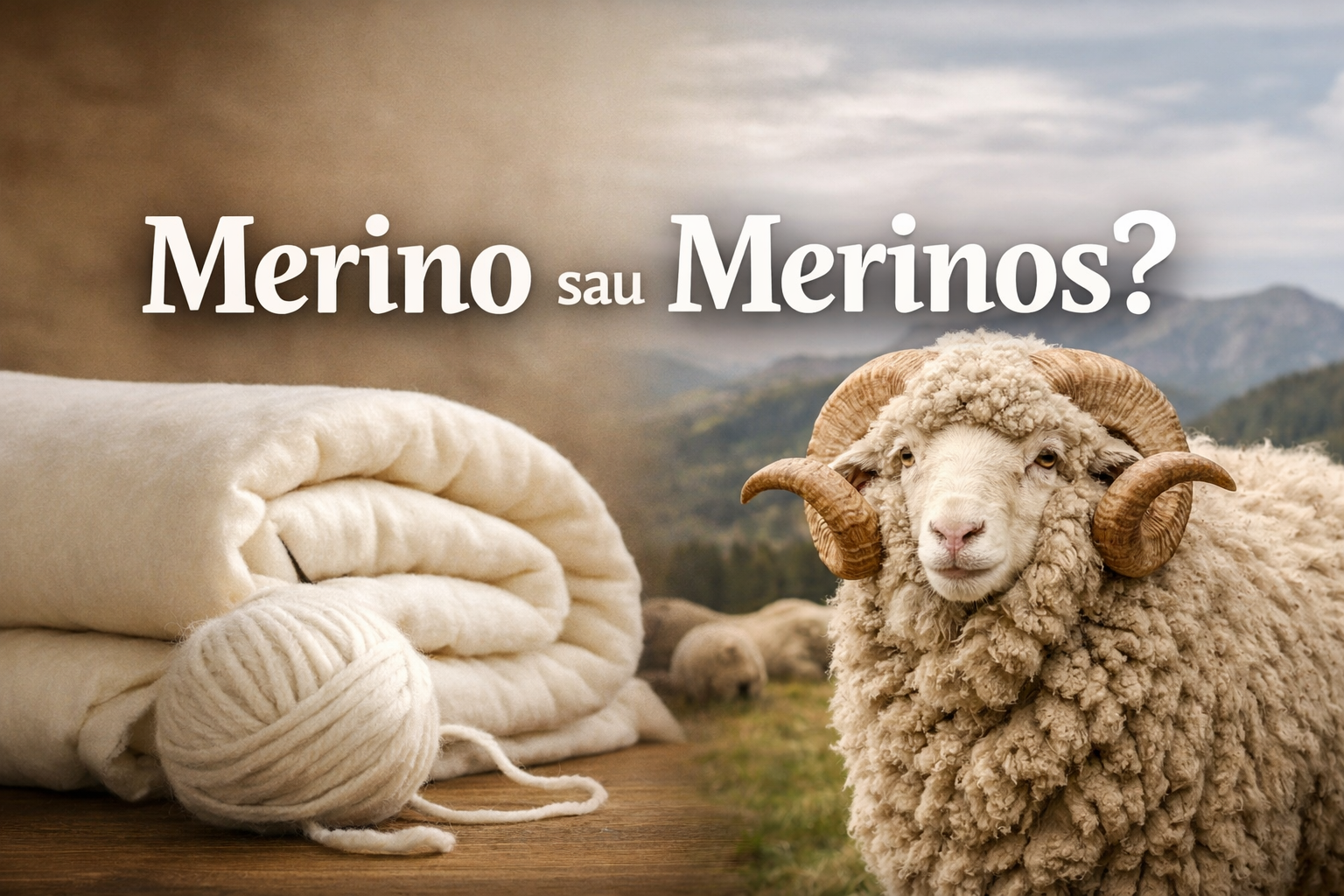
If you search Google for "Merino wool," you'll find millions of results from clothing brands, bedding manufacturers, outdoor companies, and home textile retailers. It is the internationally recognized term used throughout the English-speaking world.
In some other languages—including Romanian—the breed is traditionally referred to as Merinos, which explains why both spellings occasionally appear online.
So if most international brands use Merino, does that mean Merinos is wrong?
Not at all.
Merino and Merinos: Why Both Exist
The famous sheep breed originally takes its name from Merino, the internationally accepted English designation.
In Romanian and several other European languages, however, the breed has historically been adapted as Merinos. From a linguistic perspective, this form is perfectly correct within those languages.
That's why Romanian speakers naturally say "merinos sheep", "merinos wool" and "merinos wool duvet".
Meanwhile, English-speaking countries consistently use "merino sheep", "merino wool" and "merino wool duvet".
Both terms refer to exactly the same sheep breed and the same remarkable natural fibre.
Why Do Most Websites Use "Merino"?
The answer is simple: English has become the global language of commerce.
Most product descriptions, technical documentation, and marketing materials originate in English before being translated into other languages. As a result, the English term Merino has become widely recognized around the world.
This is why you'll often see product names such as merino wool duvet, merino socks and merino blanket.
Retailers also use the term because it is what most international customers search for online.
Regardless of whether a label says Merino or Merinos, the wool itself comes from the same remarkable breed of sheep.
But the More Important Question Is...
Why is Merino wool so highly regarded?
Its popularity has very little to do with terminology and everything to do with performance.
Merino wool is considered one of the world's finest natural fibres—not simply because it is soft, but because it works in harmony with the human body.
Natural Temperature Regulation - One of Merino wool's greatest strengths is its ability to naturally regulate body temperature. Its fibres create millions of tiny air pockets that act as natural insulation. They help retain warmth during winter while allowing excess heat to escape in warmer conditions. This is why Merino wool is equally valued in outdoor clothing and premium bedding.
Exceptional Breathability - Merino wool is naturally breathable. Air circulates freely through the fibres, helping maintain a comfortable microclimate around the body. During sleep, this can make a noticeable difference, reducing the likelihood of waking up feeling too hot or too cold.
Outstanding Moisture Management - One of Merino wool's most impressive properties is its ability to absorb up to approximately 30% of its own weight in moisture while still feeling dry to the touch. Instead of trapping humidity against the skin, it gradually releases moisture into the air, helping maintain a dry and comfortable sleeping environment throughout the night.
Gentle on Sensitive Skin - Unlike traditional wool, Merino fibres are exceptionally fine and flexible. Their softness significantly reduces the itching or irritation often associated with conventional wool, making Merino an excellent choice for products worn or used directly against the skin.
A Naturally Sustainable Fibre - Merino wool is also valued because it is a renewable, biodegradable, and naturally sustainable material. Sheep grow a new fleece every year, making wool one of the few textile fibres that is continuously renewable without relying on synthetic materials. Combined with its exceptional durability, this makes Merino wool one of the most environmentally responsible textile choices available today.
So... Merino or Merinos?
From an international perspective, Merino is the standard term used throughout the textile industry and by virtually every major wool brand. In Romanian and certain other languages, Merinos remains the traditional and linguistically correct name for the sheep breed. Whichever term appears on the label, the fibre itself is exactly the same. What truly matters isn't the spelling. It's the remarkable qualities of the wool itself—its natural breathability, temperature regulation, durability, and the lasting comfort that have made Merino wool one of the world's most respected natural fibres.